


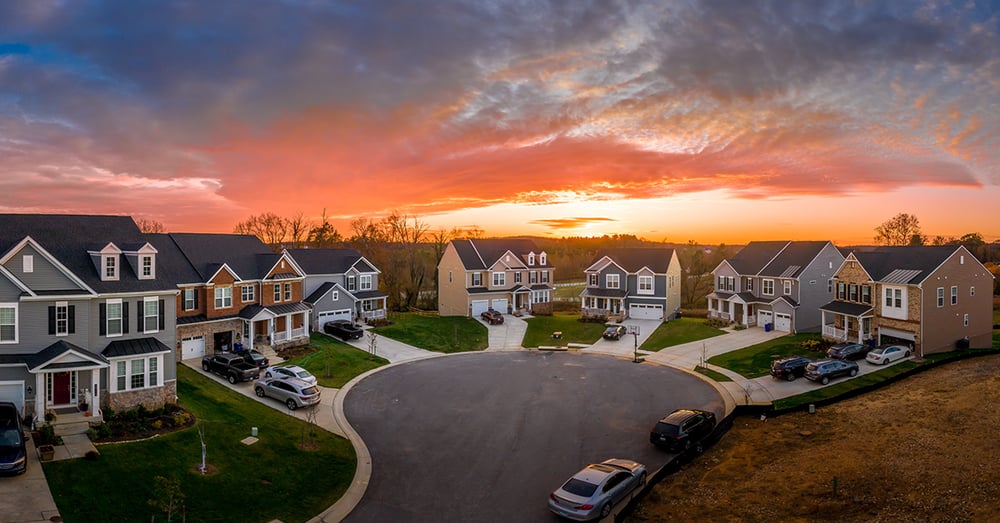


For years, a builder’s website was treated as the online model home, a kind of digital brochure designed to look good, list communities, and route leads to new home sales teams.
That era has come and gone.
Today’s builder websites are, of course, still meant to showcase a builder’s inventory and available communities to potential buyers, but that’s only part of the modern online home search. The best home builder websites are built to be a deliberate fusion of AI-indexed knowledge bases, sales enablement systems, real-time personalization engines, and data warehouses that feed CRMs, automations, and attribution models.
3 Influences Impacting This Shift
These transformational changes to home builder websites are indicative of the overall housing market, and those succeeding in this online-first landscape aren’t just adapting their websites to these forces; they’re taking advantage of them.
- Buyer behavior: Today’s homebuyers are increasingly self-guided when it comes to searching for a new home. Now more than ever, the homebuying journey is driven by the buyer’s own research, whether exploring housing options in a specific city or dissecting online reviews of a particular home builder. A builder’s website content must be ready to answer potential buyers’ questions before they’ve even asked them. Information traditionally shared by the sales agent during a home tour (e.g., local school districts, neighborhood amenities, local attractions) should be readily available on the website. In other words, buyers are well-informed and confident in their intentions when contacting the sales team for an in-person visit. What’s more, a lot of this research is done on the go. Home builder websites must prioritize a mobile-first design that optimizes website content for small screens and applications.
- Technology acceleration: As one of the first touchpoints a homebuyer will have with a builder, the overall website experience has a lot riding on it. The days of stagnant floor plans and impersonal communication are over; buyers need to be wowed. With the rise and ongoing evolution of AI technologies, creating hyper-personalized, dynamic home builder websites can be a reality for builders looking to stand out from the competition. The tools are available, and successful builders are utilizing them.
- Search disruption: AI is reshuffling traditional online search models. As homebuyers flock to search engines and AI chatbots like ChatGPT, Gemini, and Perplexity, “no-click search” is on the rise. Answers to buyers’ questions are often available without visiting a builder’s website. Think of Google’s prevalent AI Overviews at the top of the search engine result page (SERP), answering a question before directing the searcher to relevant articles. For builders, this means structuring web content that is easily cited and quoted by AI search to stay visible when SEO is in flux.
After analyzing dozens of builder sites across price points and markets, the following 20 home builder website examples consistently separate the good from the best in class.
20 Home Builder Website Examples Changing Online Home Buying
1. AI-Powered Personalization That Adapts in Real Time
Every home builder knows that no two customers are alike. From family demographics to day-to-day lifestyles, every home search is different. As such, the modern builder website should not provide the same experience to every visitor.
Luckily, with AI, delivering personalized web experiences is a reality for any home builder. Tools such as Adobe Target and Optimizely can help builders adapt web content based on location, intent, and buyer behavior. This can aid in target consumer profile (TCP) tagging as well as adapting website photos, website copy, and even the incentives being promoted via the website. To take it a step further, AI tools can dynamically reorder a builder’s new construction communities, available homes, floor plans, and even calls to action (CTAs). This moves the website from “static catalog” to an active sales assistant, guiding each buyer differently based on what they care about most.
2. Conversational AI Chat That Actually Knows the Builder’s Business
Spanning industries and innumerable queries, AI chat is no longer a novelty; however, most implementations on home builder websites are shallow. That’s because many aren’t tapping into the content and knowledge base already living on the website.
AI chatbots with the strongest implementations, like Chatbase, are trained on existing website content and company knowledge. With this training, AI agents can understand a builder’s floor plans, pricing, incentives, and warranty information, resulting in real answers to buyer questions rather than deflecting to a form. This helps escalate cleanly to human sales team members when buyer intent is high.
3. Structured Content Built for AI Answers
While Google still dominates 90% of global search, management consulting firm Gartner predicts that traditional search engine volume will drop 25% by 2026, losing significant market share to AI chatbots.
Alan Antin, Vice President Analyst at Gartner, explained, “Generative AI solutions are becoming substitute answer engines, replacing user queries that previously may have been executed in traditional search engines. This will force companies to rethink their marketing channels strategy as GenAI becomes more embedded across all aspects of the enterprise.”
To combat the dip in website clicks and spur AI search visibility, the best home builder websites structure their content so it can be easily indexed, quoted, and summarized by AI systems. This shows up as deep FAQ libraries embedded on nearly every page of the website, clear headings and subheadings, and short, direct answers in blog content.
“Companies will need to focus on producing unique content that is useful to customers and prospective customers,” said Antin. “Content should continue to demonstrate search quality-rater elements such as expertise, experience, authoritativeness, and trustworthiness.”
In other words, builders must use their website to teach AI how to talk about their brand, as home buyers conduct in-depth research into nearly every facet of the home buying process.
4. Full-Funnel Conversion Options (Not Just “Contact Us”)
The primary function of the modern home builder website is to meet buyers at the stage of the home buying process they are currently in, rather than simply directing them to a sales agent. High-performing sites offer content and initiatives at all stages of the marketing funnel.
- Top of funnel (TOFU): Known as the awareness stage, TOFU emphasizes customer engagement, education, and lead generation, rather than immediate sales. This stage attracts the broadest audience, often those exploring their options and researching what life would be like in a city, a neighborhood, or a new construction home. As such, TOFU website content that would resonate with this audience includes area guides, relocation content, and downloadable collateral about the builder and its communities.
- Middle of funnel (MOFU): Also known as the consideration stage, MOFU builds on the brand awareness established in TOFU and nurtures leads while building buyer trust. Home buyers are now aware of a builder and its homes, but may need further convincing to schedule an in-person model home tour. MOFU website content includes educational content, like testimonials, as well as nurturing for incentive alerts, event invites, and builder updates.
- Bottom of funnel (BOFU): Known as the conversion stage, BOFU is the final juncture in a buyer’s journey. This is where high-intent prospects become customers. To support this pivotal step in the sale process, builder websites should seamlessly facilitate tour scheduling and sales conversations between the new home sales professional and the buyer.
5. Automated Nurture Integrations Tied to Every Conversion
In today’s arduous housing market, potential buyers must be kept engaged between visits, where purchasing decisions are actually made. This means that conversion shouldn’t end once a website form has been submitted. Instead, builders should ensure their websites automatically enroll users in relevant email and text nurture programs. Buyers should receive incentive-specific text or email follow-ups with community-based messaging so every interaction feels tailored to their home search. This ensures potential buyers stay informed about builder pricing, new inventory, and community updates that could tip the scales toward closing a sale.
Behavior-triggered automation is an instrumental website feature for keeping buyers engaged. If, for example, a customer visits a community page or lingers on a specific floor plan for a set period of time, an immediate welcome pop-up or an incentive message should appear on screen to enhance the dynamic browsing experience.
Not every buyer is ready to purchase immediately. That’s why effective nurture strategies align with the funnel:
- TOFU: Buyers may be researching locations, timelines, or the new construction process. Website downloads, blog subscriptions, and relocation guides should trigger educational email sequences that build trust and brand awareness.
- MOFU: Buyers are comparing communities, floor plans, and pricing. Community inquiry forms and “request pricing” buttons should enroll prospects in inventory alerts, virtual tour follow-ups, and incentive-driven campaigns.
- BOFU: Buyers are scheduling tours or requesting contracts. These conversions should trigger urgency-based messaging, appointment confirmations, and sales team follow-ups designed to accelerate decision-making.
6. Crystal-Clear Positioning in the First 5 Seconds
The new construction market is crowded, and attention spans are short. Builders must get their point across in mere seconds to avoid high bounce rates and losing potential customers to the competition. Remember, a home builder's website is often the first impression buyers have of the company, homes, and new construction communities.
When a buyer lands on a homepage, they need clarity. They should instantly understand the types of homes a builder specializes in, where it builds, who the homes are built for, and the communities, as well as an approximate price range.
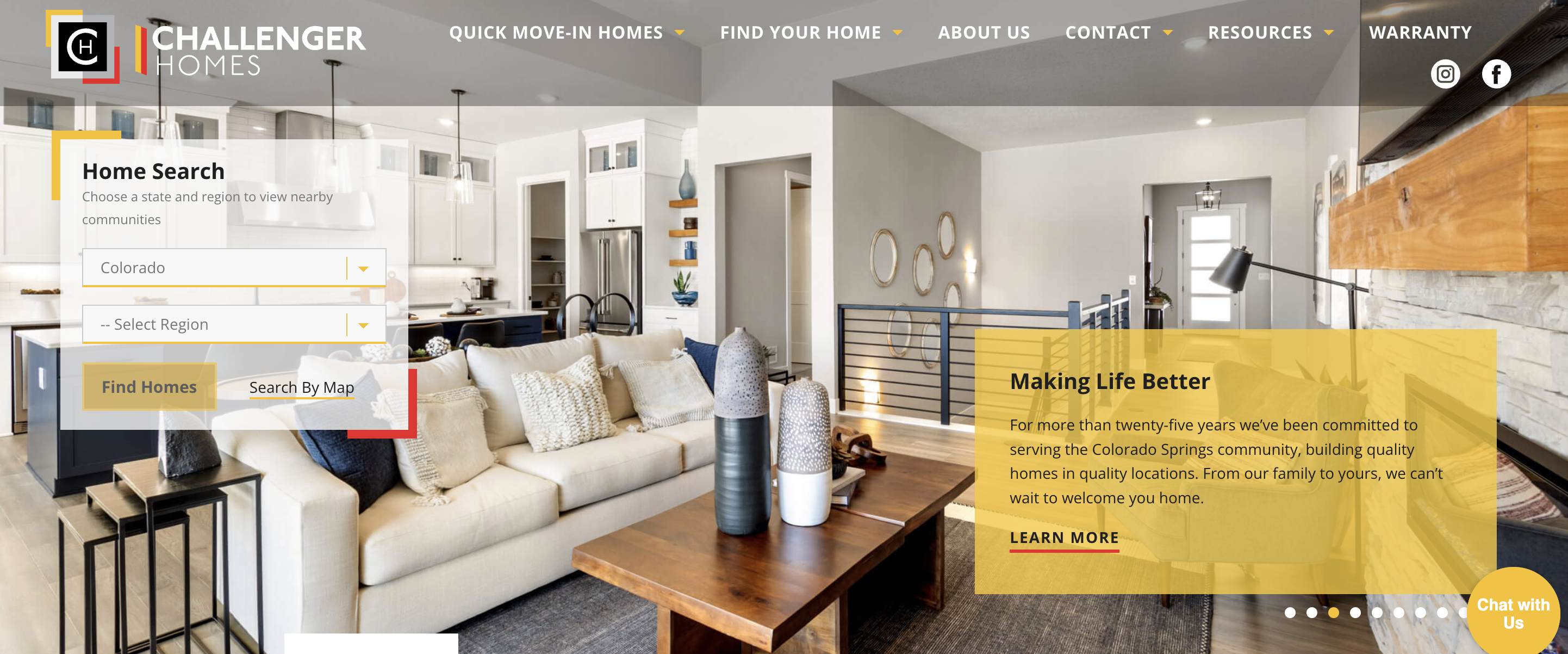
Prime builder example: Challenger Homes
7. Cinematic Photography, Video, and Live Visual Experiences
As the search for a home becomes increasingly virtual, the imagery and visuals on a home builder’s website must be scroll-stopping. The home search is incredibly optical. Purchasing a home site unseen is, in effect, unheard of, and premium photography and videos impact the buyer journey from the very first web search, especially for luxury homes. Luxury buyers expect immersion before they even set foot in the home.
To emanate that degree of luxury and elevate their brand, a home builder's website should feature video-forward design, captivating B-roll of the properties, and sophisticated photography that amplifies the home's interiors. Fixed galleries no longer appeal to today’s video-loving consumers. Homes are emotional purchases. Static images undersell them. Live-feeling visuals of the community, as well as the exterior and interior of the home, give viewers a glimpse of what life could be like without even setting foot on the property.
Prime builder example: Blue Heron
8. Interactive 3D and Immersive Experiences
In the same vein, modern buyers want to explore homes without stepping inside one. The best home builder websites seamlessly integrate 3D home tours with tools like Matterport that provide detailed layouts with precise room dimensions. Additionally, interactive floor plans and virtual walk-throughs extend time on site, increase confidence, and filter serious buyers before they ever talk to a new home sales professional. With buyers prioritizing research, the more interactive information they receive and can play with, the better.
9. Dynamic Incentives With Granular Control
Buyer incentives are strategic levers in the home buying process that are no longer option add-ons used to sweeten the deal. They also serve as practical website content that can be easily adjusted as incentives change. Displayed contextually across the site, these incentives become part of the builder’s story and a vital component of the home buying process.
Each community attracts a different type of buyer, and by having full control and the ability to design multiple incentives, builders can better match value to the specific buyer profile. This increases the likelihood that the incentive resonates with buyers on the edge of making a decision. This philosophy can also be applied at the individual home and market level. Having a variety of incentives—and the ability to manage and present them seamlessly on the website—is key.
CBH Homes demonstrates effective incentive positioning with prominently placed financing details, banners, and even pop-up windows with information about incentives set at the local market, community, and individual home level.

Prime builder example: CBH Homes
10. Personalized “Pick Up Where You Left Off” Experiences
CBH Homes also wins the game with returning website visitors. Those who have spent time on and browsed a website should feel recognized, and CBH does this in a few subtle yet powerful ways, including:
- Recently viewed communities featured on the homepage
- Homes resurfaced automatically
- Content aligned with prior behavior
During the research phase, repeat visits to a builder’s website are frequent. By helping the visitor pick up where they left off, builders can reduce friction and the cumbersome retracing of steps to find the webpage they are looking for. This can shorten the buyer journey and prompt potential buyers to reach out to the sales team quickly.
11. Event-Driven Urgency That Aligns Sales and Marketing
Who doesn’t love an event? Whether it’s an open house or the launch of a new community, gatherings hosted by builders to increase traffic are new home marketing tacticians' secret weapon. And yet, events are one of the most underutilized tools on builder websites.
The website should act as the base camp for builder events, providing all relevant information and the reasons why someone should attend. When integrated into a builder website properly, these event listings allow sales teams to launch local initiatives visibly to reach the right people. Marketing teams are provided with promotional tools and existing infrastructure for quick, seamless promotion. Events bridge the operational gap between sales and marketing better than almost anything else, and a website should be ground zero.
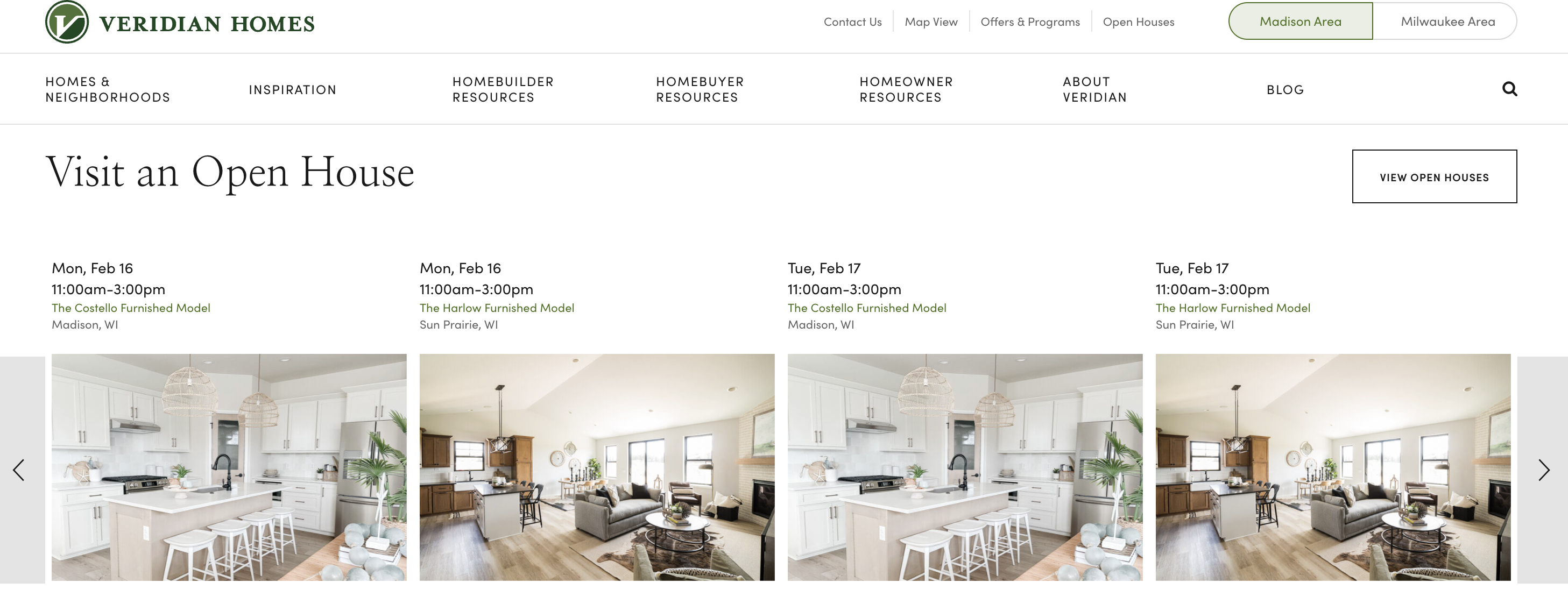
Prime builder example: Veridian Homes
12. Monthly Payment Thinking Over Sticker Price
Affordability is paramount for today’s homebuyers. To abate sticker shock when searching for a home, many want to see the cost in manageable increments, meaning they are shopping for payments, not necessarily prices. The best home builder websites, like Hayden Homes, use language that reframes the overall home price as a manageable investment while also highlighting monthly affordability through adjustable calculators that break down costs. This keeps buyers engaged longer and reduces early price shock.
13. Home Personalization and Real-Time Pricing Tools
One benefit of buying a new construction home is the in-depth customization available to homebuyers looking to personalize their home from floor to ceiling. Implementing design features into a builder’s website helps potential buyers customize home finishes, select flooring options, and see pricing updates. These features shift customization earlier in the journey — before a sales conversation — and give buyers confidence and control from home.
14. Lot Reservation & “Lock It In” Capabilities
Implementing reservation capabilities on a home builder's website is an incredible way to hasten buyers as they browse. Perhaps they come upon an available lot or a floor plan that excites them. Simply seeing the “reserve” option not only gives them a sense of agency but also urgency, knowing that another buyer could be reserving it at the same time. Even partial reservation capabilities move builders closer to true digital commerce.

Prime builder example: Century Communities
15. Interactive Lot Maps With Real-Time Availability
When combined with reservation tools, these interactive lot maps become conversion engines on builder websites. Static maps that are rarely updated can quickly become a liability when a buyer discovers the lot they wanted was sold two weeks ago. Updating lot and inventory data in real-time keeps buyers engaged and supports urgency and decision-making.
16. Pillar Pages That Own a Topic (and a Market)
To support the varying levels of research that buyers conduct throughout the home buying journey, the best home builder websites invest in comprehensive pillar pages that establish builder authority in the local housing market.
A pillar page is a comprehensive content “hub” meant to increase search visibility across both SEO and AI-search. Pillar pages cover a broad topic, for example, “Moving to Phoenix, Arizona”, and comprise one master pillar page that gives an overview of the subject (e.g. cost of living in Phoenix, nearby educational institutions, things to do with kids, popular restaurants, locals-approved outdoor activities) that links out to 20 to 30 supporting “subtopic” articles that deep dive into each of those topics. There is strong internal linking between the subtopic articles and the master article.
These pages function as:
- SEO authority hubs
- Buyer education centers
- Long-term traffic assets
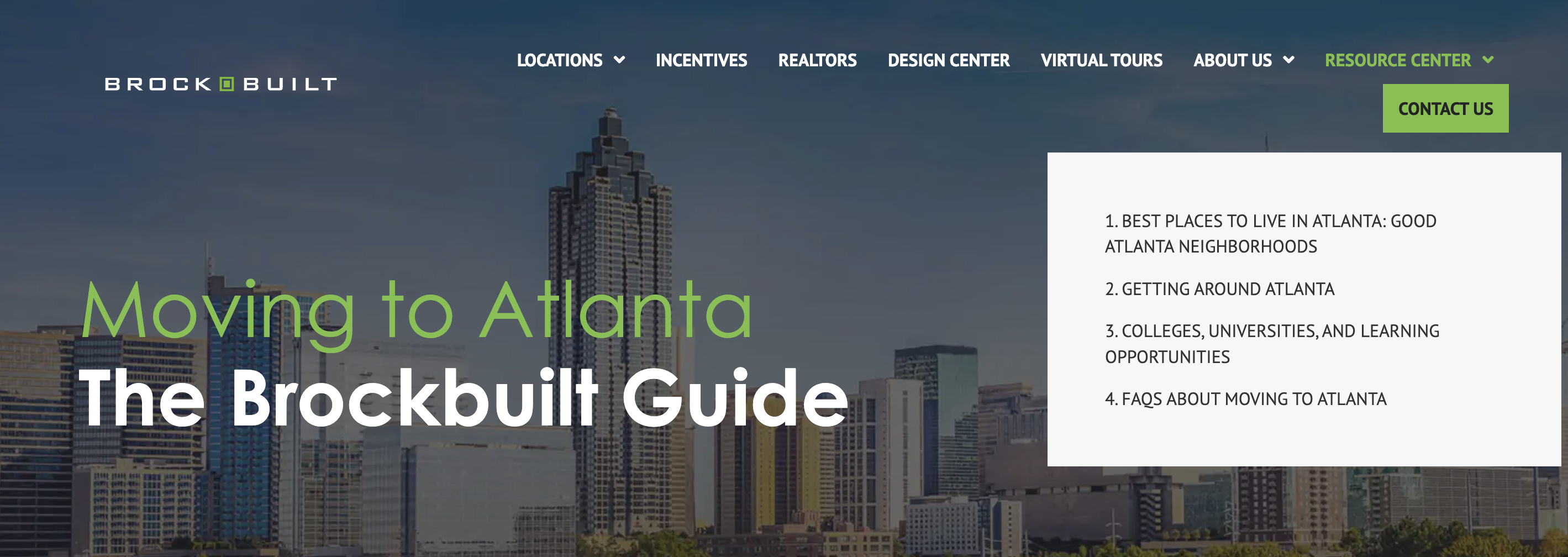
Prime builder example: Brock Built
17. Comprehensive Attribution and Call Tracking (CRM-Connected)
While forms are a great place to start when collating lead information, they simply don’t tell the whole story, which is crucial for new home sales professionals to do their job well. With platforms like Aircall, high-performing builders track calls with dynamic phone numbers. This allows the sales team to call leads and attribute directly
Forms alone don’t tell the whole story. Dynamic numbers from Aircall.
High-performing builders:
- Track calls with dynamic phone numbers
- Attribute chat, form, and call leads
- Push everything into CRM automatically
Without this, large portions of buyer intent remain invisible.
18. Accessibility and ADA-Responsive Design Controls
Accessibility and ADA compliance are just as important in the digital world as they are in the physical world. Implementing these features into a home builder website is both ethical and practical. This may include adjustable font sizes, contrast controls to easily adjust an image or display, and color accessibility options to ensure high contrast between the text and the background.
Builders who prioritize these website design features find that accessibility not only impacts usability but also strengthens users’ trust.
19. Mobile-First Design That’s Actually Designed for Mobile
In today’s online landscape, mobile is table stakes for home builder websites, but execution still varies widely. Everyone knows mobile matters, yet very few do it well. One of the best home builder website examples for mobile-friendly design is Lennar. First and foremost, Lennar’s website is designed with thumb-friendly layouts, meaning that website navigation and swipeability fall within the “thumb zone,” where a user can reach comfortably while browsing and clicking on a smartphone. Additionally, Lennar’s mobile site features large typography and clean, modern spacing, resulting in an aesthetically pleasing design.
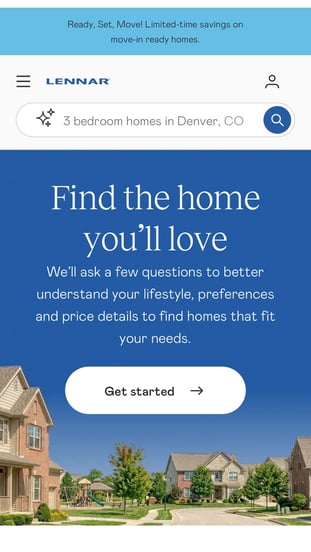
Prime builder example: Lennar
20. User-Friendly Backend System
For home builder websites, the backend system is just as salient as the consumer-facing front end. As such, backend components must be super easy for the builder’s team to manage. The best home builder websites empower internal teams with intuitive dashboards, permission controls, and transparent reporting, ensuring the site remains accurate, agile, and aligned with sales goals.
The Widening Gap Between Average and Elite Websites
The best home builder websites aren’t static; they continually evolve alongside buyer expectations, sales strategy, incentives, technological advancements, and AI-driven discovery. The gap between average and elite builder websites is widening, and the builders investing now are quietly setting themselves up to win the next decade.
Originally published Feb 16, 2026 under Explore the latest topics, updated August 14, 2026
Subscribe to our Blog
You may unsubscribe from these communications at any time. For more information, check out our privacy policy.